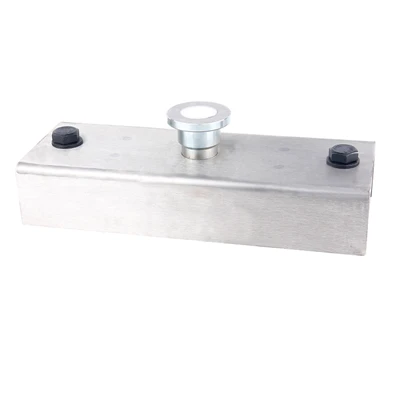
Cast-In Precast Concrete Anchors & Fixing Systems
Cast-in precast concrete anchors establish structural connections, shear transfer, and temporary or permanent fixing points across precast elements. Embedded directly into concrete elements during factory casting, these components convert localized point loads into distributed internal stress within reinforced concrete matrices.
Standard cast-in anchors eliminate structural post-drilling, avoiding rebar strikes and micro-cracking in high-stress zones. Raw material selection, hot-dip galvanizing or stainless steel metallurgy, head geometry, and precise embedment depths govern pull-out resistance, shear performance, and long-term durability under dynamic or static load conditions.
-
![Structural Concrete Anchors]() Structural Concrete AnchorsStructural concrete anchors are pre-buried or post-installed heavy-duty mechanical connection elements embedded into concrete elements to transfer static, dynamic, and seismic loads safely between structural joints. Manufactured via...view more
Structural Concrete AnchorsStructural concrete anchors are pre-buried or post-installed heavy-duty mechanical connection elements embedded into concrete elements to transfer static, dynamic, and seismic loads safely between structural joints. Manufactured via...view more -
![Heavy-Duty Concrete Anchors]() Heavy-Duty Concrete AnchorsHeavy-duty concrete anchors are structural fastening and connection components engineered for precast concrete construction, civil infrastructure, and industrial buildings. Designed to transfer high tensile and shear loads between...view more
Heavy-Duty Concrete AnchorsHeavy-duty concrete anchors are structural fastening and connection components engineered for precast concrete construction, civil infrastructure, and industrial buildings. Designed to transfer high tensile and shear loads between...view more -
![Concrete Embed Anchors]() Concrete Embed AnchorsConcrete embed anchors are structural steel components positioned within formwork prior to concrete placement to establish load-bearing attachment points. Ranging from spherical-head pin anchors and spread anchors to threaded ferrule...view more
Concrete Embed AnchorsConcrete embed anchors are structural steel components positioned within formwork prior to concrete placement to establish load-bearing attachment points. Ranging from spherical-head pin anchors and spread anchors to threaded ferrule...view more -
![Cast-In Fixing Anchors]() Cast-In Fixing AnchorsCast-In Fixing Anchors are precision-engineered steel anchoring components embedded directly into concrete formwork prior to structural pouring. By positioning these heavy-duty threaded sockets and channel assemblies ahead of placement,...view more
Cast-In Fixing AnchorsCast-In Fixing Anchors are precision-engineered steel anchoring components embedded directly into concrete formwork prior to structural pouring. By positioning these heavy-duty threaded sockets and channel assemblies ahead of placement,...view more -
![Precast Concrete Edge Anchors]() Precast Concrete Edge AnchorsPrecast Concrete Edge Anchors are embedded steel hardware components designed specifically for safe edge-lifting, tilting, and handling of thin-wall precast elements such as wall panels, architectural facades, and boundary slabs. Cast...view more
Precast Concrete Edge AnchorsPrecast Concrete Edge Anchors are embedded steel hardware components designed specifically for safe edge-lifting, tilting, and handling of thin-wall precast elements such as wall panels, architectural facades, and boundary slabs. Cast...view more -
![Concrete Shear Anchors]() Concrete Shear AnchorsConcrete shear anchors are structural embedded steel elements designed to transfer lateral shear forces and tension loads from structural steel members or precast connections into concrete foundations, walls, or floor slabs. In precast...view more
Concrete Shear AnchorsConcrete shear anchors are structural embedded steel elements designed to transfer lateral shear forces and tension loads from structural steel members or precast connections into concrete foundations, walls, or floor slabs. In precast...view more


Product Range
|
Anchor Category |
Primary Structural Function |
|
Concrete Shear Anchors |
In-plane shear transfer across joint connections |
|
Precast Concrete Edge Anchors |
Edge distance loading without concrete spalling |
|
Cast-In Fixing Anchors |
Secondary component and equipment mechanical attachment |
|
Concrete Embed Anchors |
Deep embedment tension anchorages for heavy elements |
|
Heavy-Duty Concrete Anchors |
Dynamic, seismic, and combined tension/shear structural tie |
|
Structural Concrete Anchors |
Primary load-bearing column, beam, and wall joints |
Concrete Shear Anchors
Engineered to resist parallel and perpendicular shear forces across panel-to-panel and panel-to-structure joints. Equipped with integrated shear lugs, ribbed shafts, or slotted plates, these units direct lateral loads away from the concrete boundary into surrounding stirrups and mesh reinforcement.
Precast Concrete Edge Anchors
Formulated specifically for close-to-edge placements, such as panel borders, spandrels, and thin slab edges. Specialized geometry-including flattened shanks, angled tail plates, and transverse reinforcement loops-prevents edge blowouts and concrete cone breakout under transverse tension or shear.
Cast-In Fixing Anchors
Internal threaded sockets (metric or coil threads) cast flush with the concrete surface. Designed for temporary rigging during erection or permanent attachment of MEP conduits, cladding brackets, structural steel lintels, and safety barriers. Supplied with plastic caps to preserve thread integrity during pouring and vibration.
Concrete Embed Anchors
High-tonnage tension anchors featuring forged footed ends, welded anchor plates, or wavy tails. Placed deep within the concrete core to maximize cone failure surface area, making them ideal for heavy structural connections, high overturning moments, and severe tension uplift points.
Heavy-Duty Concrete Anchors
Fabricated from high-tensile alloy steel or heavy-wall seamless tubing to handle combined high-tonnage tension and dynamic shear loads. Designed for infrastructure projects, bridge girders, crane runways, and high-impact industrial applications subject to fatigue and dynamic forces.
Structural Concrete Anchors
Primary structural ties designed for main frame connections: column-to-foundation, wall-to-beam, and panel-to-slab interfaces. Engineered to meet strict structural building codes for direct moment, tension, and shear transfer across critical precast joints.
Key Product Characteristics
Full Load Transfer via Direct Concrete Bonding: Forged heads, wavy ends, and cross-drilled tail pins distribute mechanical stresses through concrete compression cones rather than friction expansion.
Controlled Steel Metallurgy: Precision cold-headed or forged carbon steel (e.g., Q235B, Q355B, 20Mn2, 42CrMo) and austenitic/lean duplex stainless steel (AISI 304, 316, 1.4404, 1.4362) ensure predictable yield strengths and elongation parameters.
Corrosion Mitigation Systems: Surface finish options include plain black finish, electro-galvanizing (8–12 µm), hot-dip galvanizing (HDG per ISO 1461 / ASTM A153, ≥55 µm), and zinc-flake coatings (Geomet/Delta-Tone) for harsh atmospheric or de-icing salt exposure.
Dimensional Precision for Automated Production: Thread tolerances (Class 6H/6g) and controlled outer dimensions allow exact alignment with shuttering magnet adapters, rubber recess formers, and automated cage manufacturing workflows.
Ductile Failure Modes: Yield-to-tensile ratios prevent brittle steel shear before concrete cone capacity is fully utilized, ensuring predictable structural performance under overload conditions.

Key Specifications
|
Parameter |
Standard Range / Specification |
Custom Capabilities |
|
Material Grades |
Carbon Steel (Q235, Q355, 1045); Stainless Steel (304/304L, 316/316L, Duplex 2205) |
42CrMo, 20Mn2, alloy steel upon request |
|
Thread Types & Sizes |
Metric (M10 to M52); Rd Threads (Rd12 to Rd52); Coil Threads (1/2" to 1-1/2") |
UNC/UNF threads, custom pitches |
|
Ultimate Load Capacity (Tension) |
1.2 Ton to 32.0 Ton (12 kN to 320 kN per anchor) |
Up to 50 Ton (500 kN) specialized units |
|
Shear Load Range |
1.0 Ton to 25.0 Ton (10 kN to 250 kN) |
Structural capacity matched to project engineering |
|
Surface Protective Coatings |
Plain/Oiled, Electro-Galvanized (8–15 µm), Hot-Dip Galvanized (≥55 µm / 400 g/m²) |
Zinc-Flake (Geomet 321/500), Epoxy Powder Coating |
|
Manufacturing Processes |
Cold Forging, Hot Forging, CNC Precision Thread Machining, Robotic Welding |
100% Magnetic Particle Inspection (MPI) on critical welds |
|
Manufacturing Tolerances |
ISO 2768-m (General); DIN 13 / ISO 965 (Threads) |
Tighter tolerances per engineering drawings |
|
Traceability |
Stamped grade, batch code, and load rating on anchor head |
Heat-number stamping, custom part numbering |
Applications
|
Precast Element |
Anchor Type Applied |
Key Technical Function |
|
Architectural Cladding |
Edge Anchors & Fixing Sockets |
Wind load shear & tie-back adjustment |
|
Structural Shear Walls |
Shear Anchors & Structural Anchors |
In-plane shear & floor diaphragm tie |
|
Beams & Columns |
Concrete Embed & Heavy-Duty |
High-tension uplift & moment joints |
|
Hollow Core Slabs |
Cast-In Sockets with Loops |
Suspended ceiling/MEP utility anchors |
|
Civil / Utility Vaults |
Hot-Dip Galvanized Structural Units |
Earth pressure & water-tight joints |
Architectural Wall Panels & Sandwich Facades
Edge anchors and shallow fixing sockets secure exterior insulated panels to structural frames. They accommodate differential thermal movement while handling out-of-plane wind suction and dead loads.
Structural Walls, Shafts, and Shear Panels
Heavy-duty shear anchors and cast-in connection loops link precast wall panels to floor slabs and adjacent shear walls. These anchors absorb lateral dynamic forces generated by wind or seismic activity.
Precast Beams, Girders, and Columns
High-capacity embed anchors absorb severe tension loads, moment transfer, and high shear forces during structural erection and long-term service life.
Retaining Walls, Culverts, and Infrastructure
Galvanized structural concrete embed anchors handle continuous earth pressure, ground moisture exposure, and cyclic traffic vibrations in bridge abutments, precast box culverts, and retaining walls.
Modular & Pod Construction
Compact fixing anchors integrated into precast bathroom pods, volumetric concrete modules, and staircase flights enable rapid mechanical rigging, temporary positioning, and final foundation bolting.
Selection & Design Considerations

Engineering Selection Process
Determine Loading: Tension, Shear, Combined Loading, Dynamic/Fatigue.
Evaluate Geometric Limits: Slab Thickness, Edge Distance, Anchor Spacing.
Assess Environmental Exposure: Dry Indoor, Humid, Marine Environment, De-icing Salts.
Verify Concrete Parameters: Compressive Strength (f'c), Cracked vs. Uncracked Concrete, Rebar Layout.
Final Specification: Material Selection, Surface Coating, Embedment Depth (hef), Head Geometry.
Critical Selection Criteria
Edge Distance (c1, c2) & Spacing (s1, s2): Placing anchors close to element edges reduces the effective concrete breakout cone area. Edge anchors or supplementary hair-pin shear reinforcement must be specified when nominal edge distances cannot be maintained.
Concrete Characteristic Strength (fck / f'c): Pull-out capacity scales directly with concrete compressive strength at the time of loading (e.g., early-stage stripping vs. 28-day 50 MPa final strength).
Cracked vs. Uncracked Concrete States: Tension zones subject to structural bending require anchors rated for cracked concrete conditions with lower effective capacity factors.
Combined Loading Interactions: Combined tension (N_Ed) and shear (V_Ed) forces must satisfy standard interaction formulas:
(N_Ed / N_Rd)^1.5 + (V_Ed / V_Rd)^1.5 ≤ 1.0
Environmental Exposure Classes:
• Indoor Dry (XC1): Electro-galvanized or self-color carbon steel.
• Exterior Atmospheric / Humid (XC3, XC4, XS1): Hot-dip galvanized carbon steel.
• Aggressive Industrial / Marine / Chloride Exposure (XS2, XS3, XF4): Stainless steel grade 316 / Duplex 2205.

Quality & Inspection
Quality Control Workflow
Raw Material Verification: Chemical analysis and tensile testing per heat lot.
Forming & Machining: Dimensional tolerances and thread gauge verification.
Welding & Assembly: 100% visual inspection, periodic NDT/MPI, and weld penetration checks.
Surface Finishing: Coating thickness measurement per ISO 2178 and salt spray testing.
Batch Mechanical Testing: Proof load tension, ultimate failure pull-out, and hardness checks.
Documentation Package: EN 10204 Type 3.1 material certificates, inspection reports, and factory CoC.
Inspection Standards
Material Integrity & Traceability: Raw steel bars and coils undergo spectrographic chemical analysis and heat-lot tensile testing before production. Every shipment includes EN 10204 Type 3.1 Mill Test Certificates detailing yield strength (ReH), ultimate tensile strength (Rm), elongation (A5), and chemical composition.
Mechanical Pull-Out & Tensile Proof Testing: In-house hydraulic test rigs conduct destructive tension and shear pull-out tests on anchors cast into standardized concrete blocks to verify characteristic failure loads, concrete cone breakdown, and steel rupture points.
Non-Destructive Testing (NDT): Critical structural welds on embedded plates and stud anchor assemblies undergo Magnetic Particle Inspection (MPI) or Ultrasonic Testing (UT) to identify internal voids, lack of fusion, or micro-cracking.
Coating & Thickness Verification: Galvanized layers are verified using magnetic induction coating thickness gauges (ISO 2178) to ensure compliance with the minimum 55 µm requirement for hot-dip galvanized finishes. Neutral Salt Spray testing (ISO 9227 / ASTM B117) monitors corrosion resistance performance across production batches.
Supply & Customization Options
OEM & Engineering Modifications
Custom Embedment Depths & Shank Geometries: Extended shanks, custom offset bends, or welded anchor plates tailored to avoid internal pre-stressing strands or dense rebar cages.
Specialized Thread Configurations: Metric, Coil, UNC, or Trapezoidal threads with internal plastic thread protectors or magnetic holding accessories.
Integrated Reinforcement Assemblies: Anchors supplied pre-assembled with factory-welded rebar tails, shear sleeves, or positioning brackets.
Packaging, Staging & Shipping Options
Job-Site / Factory Ready Bundling: Products sorted and labeled by precast element casting lists, tag numbers, or production line stages.
Corrosion-Inhibiting Packaging: Sealed VCI (Vapor Corrosion Inhibitor) bags inside heavy-duty wooden crates or steel-banded pallets to prevent moisture damage during ocean freight.
Traceable Labeling: Outer packaging includes clear heat number tracking, product part numbers, load ratings, barcode labels, and batch IDs.
What Buyers Should Provide for Quotation
To receive an accurate engineering review and commercial quote, please provide:
Structural Load Requirements
Design tension (N_Ed), shear (V_Ed), dynamic, or fatigue load requirements per connection point.
01
Detailed Engineering Drawings
Structural detail drawings showing anchor embedment depth (hef), concrete element thickness, edge distances, and surrounding reinforcement layouts.
02
Material Grade & Finish Specifications
Desired steel grade (e.g., Q355B, Stainless Steel 316) and surface coating (Electro-galvanized, Hot-Dip Galvanized, Zinc-Flake).
03
Concrete Specifications
Characteristic concrete compressive strength (fck at 28 days and fck,cube at stripping stage).
04
Project Volume & Delivery Schedule
Target order quantities, batch shipment schedules, and destination port/incoterm requirements (FOB, CIF, DDP).
05
FAQ

Request a Quote
Submit your project requirements, structural drawings, or bill of materials directly to our technical sales team for engineering analysis and commercial estimates.
We're professional precast concrete anchors manufacturers and suppliers in China, specialized in providing high quality customized service. We warmly welcome you to wholesale precast concrete anchors in stock here from our factory.