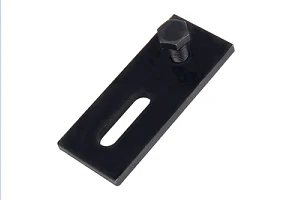
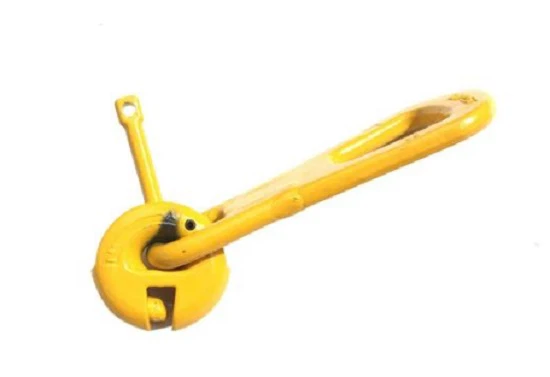
Precast Concrete Edge Anchors are embedded steel hardware components designed specifically for safe edge-lifting, tilting, and handling of thin-wall precast elements such as wall panels, architectural facades, and boundary slabs. Cast directly into the narrow edge or side profile of a concrete element, these anchors establish a secure mechanical connection for rigging hardware during yard demoulding, transport, and site erection. Their geometry shifts the lifting load inward from the fragile concrete corner, preventing edge spalling and local structural failure under shear and tensile stresses.
Key Product Characteristics
Low-Profile Edge Fit: Sized appropriately for narrow cross-sections (as thin as 100 mm to 150 mm), allowing full internal embedment without breaching concrete cover requirements.
Shear-Optimized Load Transfer: Engineered footprint disperses high localized lifting forces into the surrounding concrete mass, preventing premature pull-out during 90-degree panel rotation.
Recess Former Compatibility: Designed to pair with matching rubber or steel recess formers, creating a clean pocket for quick clutch engagement and flush surface finishing post-installation.
Corrosion Resistance Options: Available in hot-dip galvanized (HDG) or austenitic stainless steel (304/316) to prevent rust bleeding on architectural and exposed precast concrete surfaces.
Key Specifications
|
Specification Item |
Technical Parameters / Options |
|
Load Class (Safe Working Load) |
1.3 Tons to 10.0 Tons (Safety Factor >= 4:1) |
|
Thread Types |
Metric coarse threads (M12 to M36) or Round-thread (Rd12 to Rd52) matching standard lifting clutches |
|
Anchor Length |
120 mm to 450 mm (variant dependent on panel thickness and concrete compressive strength) |
|
Footprint Width |
Optimized flat or flared base plate profiles to maximize concrete bearing area |
Grades & Standards
Raw Material Steels: Seamless carbon structural steel tubing and forged alloy steel bars conforming to ISO 630 (E235/E355) and EN 10025-2 (S355JR / S355J2).
Stainless Steel Options: Grade 1.4301 (AISI 304) and Grade 1.4401 (AISI 316) for corrosive coastal exposure.
Manufacturing Compliance: Produced under ISO 9001 quality management systems; welding processes (where applicable) conform to EN ISO 3834-2 and AWS D1.1.
Regulatory Compliance: Load ratings and safety margins calculated in accordance with EU Machinery Directive 2006/42/EC and VDI/BV-BS 6205 guidelines for precast lifting accessories.
Load & Design Considerations
Concrete Strength at Demoulding: Minimum characteristic cube compressive strength must reach at least 15 MPa to 25 MPa prior to lifting, depending on anchor size and dynamic load factors.
Edge Distance & Spacing: Minimum edge distances and anchor-to-anchor spacings must be strictly maintained per structural calculation software to prevent concrete breakout cone overlap.
Dynamic Factor & Tilt Angle: Calculations must account for a dynamic amplification factor (>= 1.3) and lateral load components induced during panel tilting from horizontal casting tables to vertical storage positions.
Reinforcement Interlock: Secondary hairpin or supplementary rebar must pass through the anchor tail loop or eye to tie the anchor securely into the primary structural reinforcing cage of the wall panel.
Applications
Precast Wall Panels & Insulated Sandwich Panels: Edge-lifting and rotating exterior architectural facades.
Solid Boundary & Perimeter Slabs: Handling flat vertical elements in industrial and civil yards.
Tilt-Up Construction: Lifting site-cast wall panels directly from casting beds.
Precast Utility Vaults & Box Culverts: Demoulding thin-walled rectangular civil infrastructure components.
Quality & Inspection
Dimensional Inspection: 100% vernier caliper and thread gauge verification checking pitch diameter, anchor length, and straightness tolerances (+/- 0.5 mm).
Material Traceability: Heat number stamping on anchor bodies linking directly to EN 10204 3.1 Mill Test Certificates (MTC).
Non-Destructive Testing (NDT): Batch-sampled Magnetic Particle Testing (MT) or Ultrasonic Testing (UT) performed on forged components and load-bearing welds to detect subsurface anomalies.
Proof Load Testing: Random destructive pull-out and tensile breaking strength verification executed on internal sample lots using calibrated hydraulic test benches.
Customization Options
Non-Standard Tail Lengths: Extended or shortened anchor shanks tailored to congested reinforcement layouts in specialized precast elements.
Specialized Coatings: Thick-film hot-dip galvanizing (>= 85 um) or epoxy resin coatings for prolonged outdoor storage or aggressive chemical environments.
Custom Thread Profiles & Diameters: Inch-based UNC threads or heavy-duty metric variations built upon engineering drawings.
Packaging Configurations: Export-grade heavy-duty steel crates and corrosion-inhibitor (VCI) bagging for sea-freight protection.
What Buyers Should Provide
To ensure precise quotation and engineering verification, buyers should supply:
Panel Specifications: Total panel thickness, height, length, and estimated weight (tons).
Concrete Parameters: Minimum compressive strength at the time of demoulding and handling.
Operational Workflow: Lifting configuration details (number of pick points, sling angles, use of spreader beams).
Environmental Exposure: Indoor storage, exterior weather exposure, or marine/corrosive service conditions requiring special coatings.
Quantity & Delivery Terms: Annual volume projection, destination port (CIF/FOB), and target delivery schedule.
FAQ
Hot Tags: precast concrete edge anchors, China precast concrete edge anchors manufacturers, suppliers, factory, Precast Concrete Coil Insert