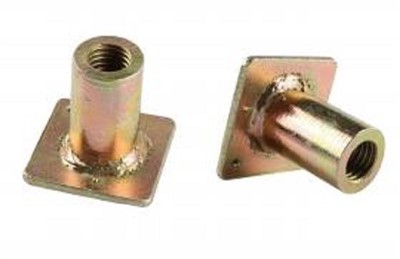
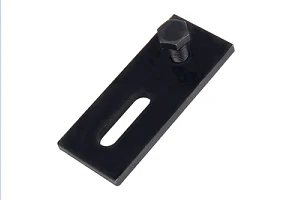
Cast-In Fixing Anchors are precision-engineered steel anchoring components embedded directly into concrete formwork prior to structural pouring. By positioning these heavy-duty threaded sockets and channel assemblies ahead of placement, precast concrete manufacturers and general contractors establish permanent, flush-mounted connection points without post-installation drilling. The embedded anchor legs and welded concrete distribution ribs transfer tensile and shear loads deep into the surrounding structural matrix, avoiding localized spalling and eliminating the risk of cutting internal reinforcement bars.
Key Product Characteristics
Pre-Set Formwork Positioning: Secured to steel or timber molds via magnetic formers, nailing plates, or steel pins to prevent displacement during vibration and concrete consolidation.
Deep Matrix Force Distribution: Welded anchor prongs and ribbed profiles transfer loads uniformly into the core concrete section rather than relying on surface friction.
Reusable Internal Threads: Precision-machined internal metric threads protected during pouring by disposable plastic caps or foam fillers, ensuring clean thread engagement upon formwork stripping.
Flush Surface Integration: Anchor upper faces mount flush with the concrete exterior, removing protruding hazards and enabling streamlined modular assembly.
Anti-Rotation Geometry: Hexagonal, square, or flanged sleeve bodies prevent component rotation inside cured concrete when tightening high-tensile connection bolts.
Key Specifications
|
Technical Parameter |
Standard Production Range |
Custom Engineering Options |
|
Thread Size |
M8, M10, M12, M16, M20, M24 |
UNC / UNF imperial threads, fine pitches, or custom lengths |
|
Anchor Length |
60 mm to 250 mm |
Project-specific embedment depths per structural calculation |
|
Body Shape |
Round ribbed sleeve, hexagonal socket, or flat-end anchor |
Stamped base plates, cross-pinned tubular shafts |
|
Allowable Load Capacity |
Tensile: 5.8 kN - 42.0 kN / Shear: 4.2 kN - 35.5 kN |
Heavy-duty dynamic load configurations |
|
Dimensional Tolerance |
+/-0.5 mm (CNC turned and laser cut) |
Strict tolerance tiers for aerospace or modular frames |
Grades & Standards
Material Classifications: Carbon steel (Q235B, Q355B, S235JR, S355JR, ASTM A36, ASTM A572 Grade 50), and Stainless Steel (Grade 304 / 1.4301, Grade 316 / 1.4401).
Execution & Welding Standards: Fabricated in accordance with EN 1090-2 (Execution of Steel Structures) and AWS D1.1 (Structural Welding Code). Welding performed under ISO 3834-2 quality requirements.
Surface Protection: Hot-Dip Galvanized (HDG) to ISO 1461 / ASTM A123 with a minimum coating thickness of 85 um for exterior exposure; plain finish for interior dry precast elements.
Traceability: EN 10204 3.1 Mill Test Certificates (MTR) supplied for every raw material heat lot.
Load & Design Considerations
Failure Modes to Evaluate: Engineers must calculate concrete cone breakout, steel tensile failure, pull-out resistance, and edge distance limitations based on ACI 318 or EN 1992-4 (Eurocode 2) design models.
Edge Distances & Spacing: Minimum edge distances must be observed to prevent premature concrete splitting. Overlapping stress cones from adjacent anchors require load reduction factors or structural reinforcement layout adjustments.
Dynamic vs. Static Loading: Standard anchors support static loads (pipe supports, cable trays, suspended ceilings). For dynamic, cyclic, or seismic applications (crane rails, industrial machinery mounts), fatigue-rated socket assemblies with increased embedment must be specified.
Concrete Strength Thresholds: Minimum characteristic cube/cylinder compressive strength of 25 MPa (C25/30) required at the time of initial fastener loading.
Applications
Precast Concrete Wall Panels: Securing structural sandwich panels, architectural cladding brackets, and interior partition supports.
Industrial Pipe & MEP Racks: Mounting heavy mechanical piping, electrical cable trays, and ventilation ductwork inside precast utility tunnels and substations.
Modular Infrastructure: Fastening guardrails, noise barriers, highway bridge secondary components, and tunnel precast lining segments.
Structural Steel-to-Concrete Joints: Connecting secondary steel framing and mezzanine support columns directly to cast concrete floor slabs or foundation beams.
Quality & Inspection
Incoming Raw Material Control: Spectrometer chemical composition analysis and tensile testing performed prior to CNC machining.
In-Process Dimensional Audits: First-Article Inspection (FAI) using Coordinate Measuring Machines (CMM) to verify critical thread pitches and body length.
Thread Verification: 100% Go/No-Go thread gauge testing on every machined internal socket to prevent site assembly galling or cross-threading.
Non-Destructive Testing (NDT): Magnetic Particle Testing (MT) and Ultrasonic Testing (UT) conducted on structural welded anchor assemblies per welding quality plans.
Coating Thickness Checks: Magnetic induction gauge verification confirming HDG zinc layer distribution meets ISO 1461 thresholds.
Customization Options
Non-Standard Geometries: Tailored anchor lengths, customized bend angles, and non-standard thread configurations (e.g., M27, M30, or custom imperial sizes) engineered for unique architectural geometries.
Specialized Materials: Alloy steels for extreme low-temperature environments or marine-grade duplex stainless steels for high-chloride wastewater and coastal installations.
Integrated Fixing Plates: Combination of threaded sockets welded onto stamped structural steel mounting plates for multi-directional load sharing.
Protective Thread Masking: High-temperature silicone caps or custom-molded plugs fitted to keep internal threads completely sealed against concrete slurry ingress.
What Buyers Should Provide
To accelerate technical submittal review, engineering design, and quotation, please provide the following project parameters:
Engineering Drawings: Structural shop drawings, CAD files (DWG/STEP), or Tekla models showing element dimensions and reinforcing bar layouts.
Load Requirements: Ultimate or working design loads (Tensile N_Ed and Shear V_Ed in kN), specifying whether loads are static, seismic, or fatigue-prone.
Environmental Classification: ISO 12944 atmospheric corrosivity category (C1 to C5) or specific exposure conditions (e.g., chemical plant, marine coastal).
Concrete Specifications: Compressive strength class (C_cube / C_cylinder), minimum curing timelines, and element thickness constraints.
Volume & Delivery Schedule: Total quantity required per size type, target delivery milestones, and export packaging specifications (e.g., VCI anti-corrosion wrapping, export-certified wood pallets).
FAQ
Hot Tags: cast-in fixing anchors, China cast-in fixing anchors manufacturers, suppliers, factory, Precast Concrete Coil Insert