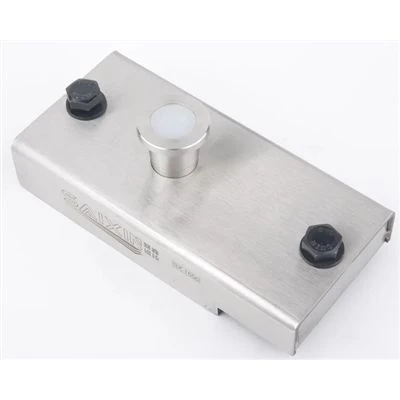
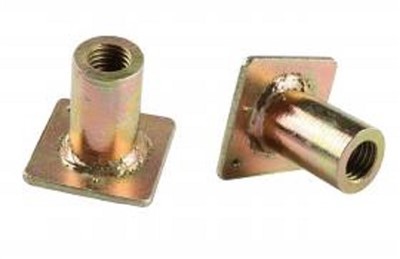
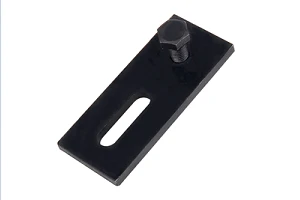
Structural concrete anchors are pre-buried or post-installed heavy-duty mechanical connection elements embedded into concrete elements to transfer static, dynamic, and seismic loads safely between structural joints. Manufactured via precision forging, cold heading, and CNC machining, these anchors integrate directly into precast wall panels, columns, beams, and industrial foundations. They provide reliable load transfer paths in prefabricated building connections, civil engineering structures, and heavy equipment mounting configurations.
Key Product Characteristics
Thread Integrity: Rolled threads offer higher tensile and fatigue resistance compared to cut threads, maintaining pitch precision under cyclic loads.
Load Distribution Collar: Forged or welded anchor plates/collars prevent pull-through failure by distributing concentrated bearing stress into the surrounding concrete matrix.
Corrosion Defense: Hot-dip galvanizing (HDG) or zinc flake coatings provide sacrificial or barrier protection against aggressive moisture and chemical ingress in exterior or marine environments.
Weldable Shanks: Selected carbon steel grades feature low carbon equivalents (CEV), allowing direct structural welding to rebar cages or embedded steel plates without embrittlement.
Key Specifications
|
Parameter |
Standard Range |
Customization Limit |
|
Diameter (d) |
M12 - M36 (1/2" - 1-1/2") |
Up to M56 (2-1/2") |
|
Total Length (L) |
100 mm - 600 mm |
Up to 1200 mm |
|
Thread Type |
Metric ISO / UNC (Coarse) |
Metric Fine / Custom Pitch |
|
Thread Length (b) |
30 mm - 150 mm |
Full Thread Available |
|
Min. Concrete Strength |
C20/25 (2,500 psi) |
High-Strength Concrete > C60/75 |
|
Tensile Capacity Range |
25 kN - 320 kN |
Calculated per project drawing |
Grades & Standards
Material Grades: Carbon Steel (Q345B, 35#, 45#, 42CrMo) and Stainless Steel (AISI 304, AISI 316). Equivalent ASTM grades (e.g., ASTM A307, A36, A193 B7) available upon request.
Mechanical Properties: Yield strength ranges from 235 MPa to 830 MPa; ultimate tensile strength spans 400 MPa to 1030 MPa corresponding to Property Classes 4.6, 8.8, and 10.9.
Manufacturing & Testing Standards: Complies with ISO 898-1 for mechanical fasteners, ACI 318 provisions for anchoring to concrete, and EN 1992 (Eurocode 2) design standards.
Load & Design Considerations
Failure Modes: Structural engineers must evaluate concrete cone breakout, steel tensile/shear rupture, pull-out, and side-face blowout during design phases.
Edge Distances & Spacing: Minimum edge distances and anchor-to-anchor spacing must be maintained to prevent overlapping concrete stress cones and premature splitting.
Dynamic & Seismic Factors: Cyclic fatigue and seismic displacement require reduction factors applied to nominal capacity values; specify 42CrMo alloy variants for high-vibration dynamic setups.
Applications
Precast Sandwich Wall Panels & Facade Fixings: Transfers out-of-plane wind and gravity loads; utilizes stainless steel or hot-dip galvanized finishes to prevent thermal bridging and corrosion.
Industrial Column-to-Foundation Base Plates: Secures heavy precast or steel columns against high bending moments and shear forces using high-strength alloy variants (Property Class 8.8/10.9).
Bridge Girders & Highway Barriers: Absorbs high-impact dynamic and seismic forces in infrastructure, featuring heavy corrosion defense against environmental exposure and continuous vehicular vibration.
Heavy Machinery Flooring Mounts: Anchors dynamic industrial equipment using precision socket anchors and non-shrink grout to prevent operational displacement and cyclic fatigue.
Structural Steel-to-Concrete Transitions: Provides continuous load paths for combined shear and tensile stresses when joining structural steel framing to precast concrete walls using weldable shanks.
Quality & Inspection
Raw Material Traceability: Spectrometric chemical composition analysis is conducted on every steel heat lot prior to production.
Dimensional Verification: 100% profile checking using digital calipers, thread GO/NO-GO gauges, and optical comparators.
Destructive & Non-Destructive Testing: Batch tensile testing performed on universal testing machines; magnetic particle inspection (MPI) applied to forged heads and welds to detect micro-surface cracks.
Coating Thickness Testing: Magnetic induction instruments measure galvanizing layer thickness to verify compliance with ASTM A153 / ISO 1461.
Customization Options
Tailored Dimensions: Non-standard thread lengths, extended shank diameters, or specialized thread pitches (UNC/UNF).
Custom Geometries: Welded rebar tails, bent anchor legs, custom base plate configurations, or integrated shear studs.
Surface Treatments: Variable coating weights for hot-dip galvanizing, mechanical galvanizing, or passivated stainless steel finishes.
What Buyers Should Provide
To accelerate quotation and technical evaluation, submit the following parameters:
Application Type: Precast pre-buried application or post-installed retrofit.
Design Loads: Required tensile load (N) and shear load (V) (service load or ultimate limit state).
Concrete Specifications: Minimum concrete compressive cylinder/cube strength (f'c / f_cu) and member thickness.
Material & Finish: Steel grade requirements and corrosion protection standards (e.g., ISO vs. ASTM compliance).
Quantity & Delivery Schedule: Target order volume and destination port for freight calculation.
FAQ
Hot Tags: structural concrete anchors, China structural concrete anchors manufacturers, suppliers, factory, Precast Concrete Coil Insert