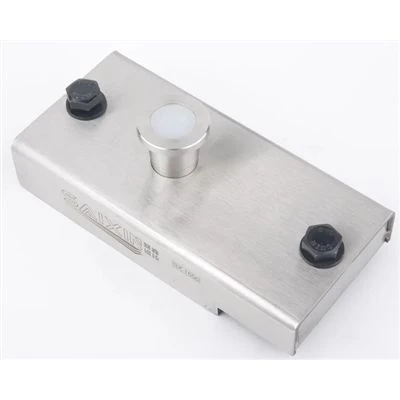
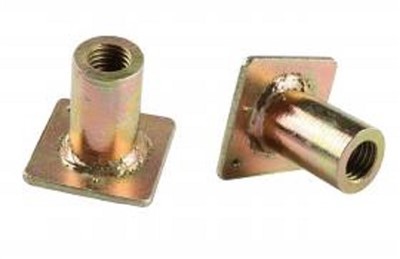
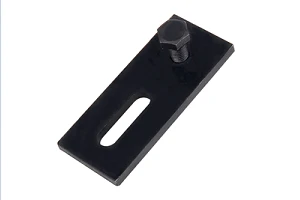
Heavy-duty concrete anchors are structural fastening and connection components engineered for precast concrete construction, civil infrastructure, and industrial buildings. Designed to transfer high tensile and shear loads between precast elements or structural steel frameworks, these anchors eliminate the need for slow, weather-dependent on-site wet connections and continuous field welding. They serve as critical load-bearing nodes in wall-to-floor connections, column-to-foundation splices, and heavy equipment mountings.
Key Product Characteristics
High Load Transfer Efficiency: Engineered to absorb combined vertical shear, horizontal tension, and out-of-plane wind or seismic forces without structural slip.
Precision Dimensional Control: Components are manufactured using automated CNC fiber laser cutting and robotic welding, maintaining critical connection pitch tolerances within +/-0.5 mm.
Traceable Material Integrity: Fabricated strictly from certified structural steel grades and high-strength fasteners mapped directly to raw material heat numbers.
Site Installation Speed: Pre-engineered with slotted holes and standardized thread configurations to reduce crane handling time and on-site assembly labor.
Key Specifications
|
Parameter |
Specification / Range |
|
Anchor Thread Sizes |
M8 to M24 (5/16" to 1") |
|
Anchor Lengths |
65 mm to 300 mm |
|
Borehole Diameters |
12 mm to 32 mm |
|
Embedment Depth |
50 mm to 180 mm |
|
Characteristic Tensile Load (N_Rk) |
12.5 kN - 105.0 kN (C20/25 Concrete) |
|
Characteristic Shear Load (V_Rk) |
15.0 kN - 120.0 kN (Grade 8.8 Steel) |
Grades & Standards
|
Category |
Material / Standard Specifications |
|
Structural Steel Grades |
S235JR, S355JR, S355J2+N, Q235B, Q355B |
|
High-Strength Fasteners |
Grade 8.8, 10.9, 12.9 (ISO 898-1 / ASTM A325 / ASTM A490) |
|
Stainless Steel Grades |
Grade 304 (1.4301), Grade 316 (1.4401) |
|
Manufacturing Standards |
EN 1090-2 (Execution of Steel Structures), ISO 3834-2 (Quality Requirements for Fusion Welding) |
|
Design Provisions |
ACI 318 / Eurocode 2 (EN 1992-1-1) & Eurocode 3 (EN 1993-1-8) |
Load & Design Considerations
Static vs. Dynamic Loading: Verify whether the application involves constant static dead loads, wind uplift, or cyclic fatigue loads from heavy machinery.
Concrete Strength Class: Base material concrete must meet minimum compressive strength requirements (typically C25/30 to C50/60) to prevent edge breakout or cone failure under maximum anchor tension.
Edge Distances & Spacing: Ensure minimum embedment depth and spacing intervals comply with structural calculation software (such as ACI or Eurocode design models) to avoid overlapping stress zones.
Corrosion Environment: Select protective coatings based on ISO 12944 atmospheric classifications (e.g., C3 for industrial urban sites, C5 for marine environments).
Applications
Precast Wall-to-Floor Connections: Securing precast exterior wall panels and interior shear walls to horizontal floor slabs and foundation podiums.
Column Splicing & Base Fixing: Transferring heavy column loads to foundation footings using embedded anchor assemblies.
Civil Infrastructure & Energy: Substation utility vaults, bridge piers, tunnel segments, and precast rail transit elements.
Industrial Facilities: Multi-story distribution warehouses and heavy plant equipment foundations requiring rigid mechanical anchoring.
Quality & Inspection
Raw Material Testing: Spectrometric chemical composition analysis and mechanical tensile testing per batch, verified via EN 10204 3.1 Material Test Reports (MTR).
Weld Non-Destructive Testing (NDT): 100% visual inspection supplemented by Ultrasonic Testing (UT) or Magnetic Particle Testing (MT) on structural welds.
Coating Thickness Verification: Dry film thickness checks for Hot-Dip Galvanized layers (ensuring average thickness >= 85 um per ISO 1461 / ASTM A123).
Traceability: Permanent stamped heat numbers and component tracking codes matching quality inspection documentation.
Customization Options
Non-Standard Geometries: Tailored anchor plate dimensions, custom stud lengths, and specialized bending angles based on structural DFM (Design for Manufacturability) reviews.
Surface Finishes: Hot-Dip Galvanizing (HDG), Zinc-Nickel plating, Electro-Galvanizing, or mill-finish stainless steel.
Packaging & Kitting: Project-phase specific sorting, color-coded component tagging, barcoding, and heavy-duty steel pallet crating with VCI anti-corrosion film.
What Buyers Should Provide
To accelerate technical evaluation and formal quotation, engineering procurement teams should submit:
Structural Drawings: CAD (.dwg, .dxf), BIM models (.ifc, .stp), or PDF shop drawings showing connection nodes.
Load Parameters: Maximum design tension (N_Ed) and shear (V_Ed) forces, or required working load limits (WLL).
Substrate Data: Concrete strength class and expected service environment (indoor, outdoor, marine, or chemical exposure).
Volume & Delivery Schedule: Target batch quantities, required surface treatment specifications, and destination port for freight calculation.
FAQ
Hot Tags: heavy-duty concrete anchors, China heavy-duty concrete anchors manufacturers, suppliers, factory, Precast Concrete Coil Insert