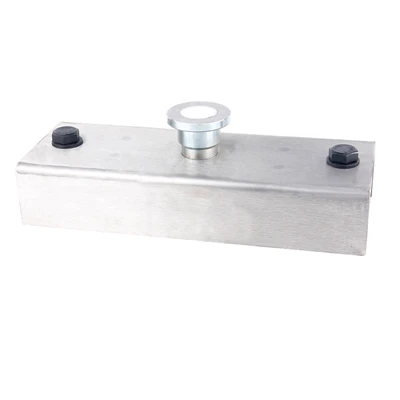
The working principle of the fixture is mainly based on the two core functions of positioning and clamping, ensuring that the workpiece maintains a stable and precise position during the processing. The following is a detailed analysis of its working principle:
1. Positioning principle
The fixture contacts the reference surface of the workpiece through positioning elements (such as positioning pins, blocks, etc.), limits the freedom of the workpiece, and ensures that it is in the correct position during the processing. According to the "six-point positioning principle", the workpiece has six degrees of freedom in the spatial rectangular coordinate system. The fixture limits these degrees of freedom through six reasonably distributed support points to fully determine the position of the workpiece.
2. Clamping principle
The clamping device applies clamping force through mechanical force (such as spiral, air pressure or hydraulic pressure) to overcome the cutting force and prevent the workpiece from shifting during the processing. The application of clamping force needs to be balanced, both to ensure that the workpiece is stable and to avoid deformation of the workpiece due to excessive clamping.
3. Operation steps
The operation of the fixture usually includes the following steps:
Place the workpiece on the positioning reference of the fixture.
Adjust the clamping device and apply appropriate clamping force.
Lock the fixture and verify the stability of the workpiece.
Perform processing, release the fixture and remove the workpiece after completion.
4. Auxiliary components
Some fixtures also contain guides or tool setting devices to further ensure processing accuracy. For example, pins and quick-release screw clamps may be used in welding fixtures to ensure accurate positioning and quick removal of the workpiece during welding.
5. Working principle of special fixtures
Internal support fixture: Through the cooperation of the support rod and the clamping block, the elastic force generated by elastic deformation is used to clamp the workpiece, which is suitable for workpieces of different diameters or shapes.
Expansion mandrel fixture: Based on the principle of radial expansion, the expansion mechanism is expanded through pneumatic or hydraulic technology, and it fits tightly with the inner hole of the workpiece to achieve stable clamping.
Hydraulic fixture: The hydraulic system is used to control clamping and loosening, and the piston is pushed by the hydraulic cylinder to drive the jaw module to achieve clamping action.