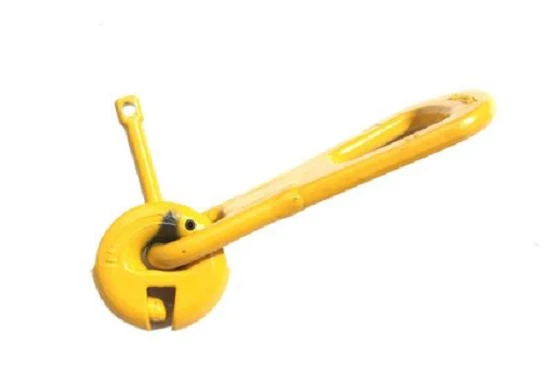
As a supplier of Pin Anchor Steel Formers, I understand the critical importance of installation accuracy. In the construction and manufacturing industries, the proper installation of Pin Anchor Steel Formers can significantly impact the safety, durability, and functionality of the overall structure. This blog post will delve into the installation accuracy requirements for a Pin Anchor Steel Former, highlighting key aspects that every installer should be aware of.
Understanding the Basics of Pin Anchor Steel Formers
Pin Anchor Steel Formers are essential components used for various applications, including lifting and fixturing systems. They provide a secure and reliable connection point for lifting heavy loads, ensuring that the load is evenly distributed and safely supported. Some common types of Pin Anchor Steel Formers include Lifting Clutch, Lifting Eye Anchor, Pipe Anchor Rubber Ring, Lifting Anchor, and Pin Anchor Rubber Magnetic Former.
Precise Location and Alignment
One of the primary installation accuracy requirements for a Pin Anchor Steel Former is precise location and alignment. The former must be installed at the exact location specified in the design plans. Any deviation from the intended location can lead to uneven load distribution, which may compromise the structural integrity of the system.
To ensure accurate location, it is crucial to use proper measuring tools such as lasers and total stations. These tools can provide highly accurate measurements, allowing installers to place the Pin Anchor Steel Former within the required tolerance. Additionally, alignment is equally important. The former must be aligned correctly with the load path and other components of the lifting or fixturing system. Misalignment can cause excessive stress on the former and other connected parts, increasing the risk of failure.
Depth of Installation
The depth of installation is another critical factor in ensuring the proper functioning of a Pin Anchor Steel Former. The former must be installed to the specified depth to provide sufficient anchorage and load-bearing capacity. If the former is not installed deep enough, it may not be able to withstand the applied loads, leading to pull-out or failure.
On the other hand, if the former is installed too deep, it can cause damage to the surrounding structure or interfere with other components. Therefore, it is essential to follow the manufacturer's recommendations regarding the depth of installation. This may involve using specialized installation equipment to ensure that the former is inserted to the correct depth.
Levelness and Plumbness
Levelness and plumbness are also important installation accuracy requirements. The Pin Anchor Steel Former should be installed in a level and plumb position. A non - level or non - plumb former can cause the load to be unevenly distributed, which can lead to premature wear and failure of the former and other components.
To achieve levelness and plumbness, installers can use spirit levels and plumb bobs. These simple yet effective tools can help ensure that the former is installed in the correct orientation. Regular checks during the installation process can help identify and correct any deviations from the required levelness and plumbness.
Torque Specifications
When installing a Pin Anchor Steel Former, it is essential to follow the specified torque requirements. The torque applied to the fasteners used to secure the former will determine the clamping force and the overall stability of the installation. Over - tightening the fasteners can cause damage to the former or the surrounding structure, while under - tightening can result in loose connections, increasing the risk of movement and failure.
Most manufacturers provide detailed torque specifications for their Pin Anchor Steel Formers. These specifications should be strictly followed, and the use of torque wrenches is highly recommended to ensure accurate torque application.
Surface Preparation
Proper surface preparation is also a key factor in achieving accurate installation. The surface where the Pin Anchor Steel Former will be installed must be clean, dry, and free of any contaminants such as oil, grease, or debris. Contaminants can reduce the bond strength between the former and the surface, leading to reduced load - bearing capacity.
The surface should also be smooth and flat to ensure proper contact between the former and the structure. Any irregularities on the surface can cause uneven stress distribution and may affect the overall performance of the former.
Verification and Testing
After the installation of the Pin Anchor Steel Former is complete, verification and testing are necessary to ensure that the installation meets the accuracy requirements. This may involve visual inspections to check for proper alignment, levelness, and the integrity of the connections.
Non - destructive testing methods such as ultrasonic testing or magnetic particle testing can also be used to detect any internal defects or cracks in the former. Additionally, load testing can be performed to verify the load - bearing capacity of the former. This involves applying a known load to the former and monitoring its performance.
Importance of Installation Accuracy for Our Customers
As a supplier, we understand that the installation accuracy of our Pin Anchor Steel Formers directly impacts our customers' projects. Accurate installation ensures the safety of workers, the reliability of the lifting and fixturing systems, and the long - term durability of the structures.
By providing high - quality Pin Anchor Steel Formers and clear installation guidelines, we aim to support our customers in achieving the best possible installation results. Our products are designed to meet the highest industry standards, and we are committed to providing excellent customer service to assist with any installation - related questions or issues.
Contact Us for Your Pin Anchor Steel Former Needs
If you are in the market for Pin Anchor Steel Formers, we invite you to contact us for more information. Our experienced team can provide you with detailed product specifications, installation guidance, and pricing. We are dedicated to helping you find the right solutions for your specific applications. Whether you are working on a small - scale project or a large - scale industrial installation, we have the expertise and products to meet your needs. Don't hesitate to reach out and start a discussion about your Pin Anchor Steel Former requirements.
References
- "Installation Guidelines for Lifting and Fixturing Systems", Industry Standards Handbook, 20XX Edition
- "Principles of Structural Anchoring", Engineering Journal, Vol. XX, Iss. XX, 20XX
- Manufacturer's Manuals for Pin Anchor Steel Formers, [List of Manufacturers], 20XX - 20XX