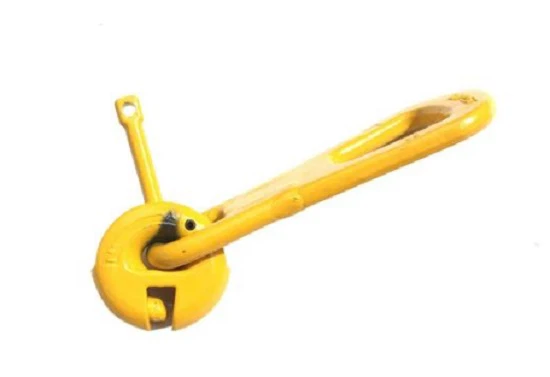
Retaining walls are essential structures in civil engineering, designed to hold back soil, rock, or other materials and prevent erosion and landslides. When it comes to constructing or reinforcing retaining walls, the choice of anchoring systems is crucial. As a supplier of Spread Anchors, I am often asked whether these anchors can be used effectively in retaining wall applications. In this blog, we will explore the potential of Spread Anchors in retaining walls, examining their technical features, advantages, and limitations, and providing insights into their suitability for different types of retaining walls.
Understanding the Spread Anchor
A Spread Anchor is a type of mechanical anchor that expands within a pre-drilled hole in the base material, creating a secure and reliable connection. The anchor consists of a central rod with expandable wings or petals at the end. When the rod is tightened, the wings expand outward, gripping the sides of the hole and providing a high level of pull-out resistance. Spread Anchors are commonly used in a variety of applications, including concrete structures, masonry walls, and steel connections.

Technical Features of Spread Anchors
- High Load Capacity: Spread Anchors are designed to withstand high tensile and shear loads, making them suitable for heavy-duty applications. The load capacity of a Spread Anchor depends on several factors, including the diameter and length of the anchor, the type of base material, and the installation method.
- Easy Installation: One of the key advantages of Spread Anchors is their ease of installation. They can be installed quickly and easily using standard hand tools, without the need for specialized equipment or training. This makes them a cost-effective solution for many construction projects.
- Versatility: Spread Anchors can be used in a wide range of base materials, including concrete, brick, block, and stone. They are also available in different sizes and configurations to suit various application requirements.
- Corrosion Resistance: To ensure long-term durability, Spread Anchors are typically made from high-quality materials, such as stainless steel or galvanized steel, which offer excellent corrosion resistance.
Using Spread Anchors in Retaining Walls
Retaining walls can be classified into several types, including gravity walls, cantilever walls, sheet pile walls, and anchored walls. The suitability of Spread Anchors for a particular retaining wall depends on the type of wall, the soil conditions, and the design requirements.
Gravity Retaining Walls
Gravity retaining walls rely on their own weight to resist the lateral pressure of the soil. They are typically made of concrete or masonry and are often used for low-height applications. Spread Anchors can be used in gravity retaining walls to provide additional stability and prevent sliding or overturning. By anchoring the wall to the underlying soil or rock, Spread Anchors can increase the overall resistance of the wall to lateral forces.
Cantilever Retaining Walls
Cantilever retaining walls are designed to resist the lateral pressure of the soil by cantilevering from a base slab. They are commonly used for medium-height applications and are typically made of reinforced concrete. Spread Anchors can be used in cantilever retaining walls to provide additional support for the wall stem and prevent it from rotating or deflecting. By anchoring the wall stem to the base slab or the underlying soil, Spread Anchors can improve the overall stability and performance of the wall.
Sheet Pile Retaining Walls
Sheet pile retaining walls are constructed using interlocking steel or concrete sheets driven into the ground. They are commonly used for temporary or permanent excavation support and for waterfront applications. Spread Anchors can be used in sheet pile retaining walls to provide additional support for the sheets and prevent them from bowing or buckling under the lateral pressure of the soil. By anchoring the sheets to the underlying soil or rock, Spread Anchors can increase the overall stiffness and stability of the wall.
Anchored Retaining Walls
Anchored retaining walls rely on external anchors, such as soil nails or tie-backs, to resist the lateral pressure of the soil. They are commonly used for high-height applications and are typically made of reinforced concrete or steel. Spread Anchors can be used in anchored retaining walls as an alternative to traditional soil nails or tie-backs. They offer several advantages, including higher load capacity, easier installation, and better corrosion resistance.
Advantages of Using Spread Anchors in Retaining Walls
- High Load Capacity: Spread Anchors can provide a high level of pull-out resistance, making them suitable for heavy-duty applications. This allows them to effectively resist the lateral pressure of the soil in retaining walls, ensuring the stability and safety of the structure.
- Easy Installation: The simple design of Spread Anchors allows for quick and easy installation, reducing labor costs and construction time. This is particularly beneficial for large-scale retaining wall projects.
- Versatility: Spread Anchors can be used in a wide range of base materials and soil conditions, making them a flexible solution for different types of retaining walls. They can also be used in combination with other anchoring systems to provide additional support.
- Corrosion Resistance: The use of high-quality materials in the construction of Spread Anchors ensures excellent corrosion resistance, which is essential for long-term durability in retaining wall applications. This reduces the need for maintenance and replacement, saving time and money in the long run.
Limitations of Using Spread Anchors in Retaining Walls
- Soil Conditions: The effectiveness of Spread Anchors in retaining walls depends on the soil conditions at the site. In some cases, such as in loose or sandy soils, the load capacity of the anchors may be reduced, and additional measures may be required to ensure the stability of the wall.
- Installation Depth: The installation depth of Spread Anchors is limited by the length of the anchor and the drilling equipment. In some cases, it may be necessary to use longer anchors or specialized drilling techniques to achieve the required depth.
- Cost: While Spread Anchors offer several advantages, they may be more expensive than some traditional anchoring systems. The cost of the anchors, as well as the installation equipment and labor, should be considered when evaluating the suitability of Spread Anchors for a particular retaining wall project.
Conclusion
In conclusion, Spread Anchors can be a viable option for use in retaining walls, offering high load capacity, easy installation, versatility, and corrosion resistance. However, their suitability depends on several factors, including the type of retaining wall, the soil conditions, and the design requirements. Before using Spread Anchors in a retaining wall project, it is important to consult with a qualified engineer or geotechnical expert to ensure that the anchors are properly designed and installed.
If you are considering using Spread Anchors in your retaining wall project, I encourage you to explore our range of Spread Anchor Magnetic Fixing Plate and Spread Anchor Ring Clutch products. Our team of experts is available to provide technical support and guidance to help you select the right anchoring solution for your specific needs. Contact us today to discuss your project and learn more about how our Spread Anchors can help you achieve a safe and stable retaining wall.
References
- ACI 318-19: Building Code Requirements for Structural Concrete and Commentary. American Concrete Institute.
- FHWA: Retaining Wall Design and Construction. Federal Highway Administration.
- O'Reilly, M. P., & Brown, E. T. (1991). Shallow Foundations. John Wiley & Sons.